The Short Answer
Mafia Island, Tanzania's least-developed marine destination, is best visited October through March, when whale sharks aggregate in the Mafia Channel. The Marine Megafauna Foundation has photo-identified about 208 individual whale sharks off Tanzania over eight years of monitoring, and the population trend is described as stable. There's no ferry: fly in on a 30–50 minute domestic hop from Dar es Salaam. The marine park charges a daily per-person conservation fee — sources differ on the exact amount, so confirm it with the park or your operator.
Tanzania’s least-known marine park
Mafia Island sits roughly 200 km south of Zanzibar and is a 30–50 minute flight from Dar es Salaam, and it gets a fraction of the visitors either of those places do. There’s no bridge to fame here the way Zanzibar has Stone Town or the Serengeti has the migration — Mafia’s entire pitch is one channel of water and what swims through it.
From October through March, whale sharks (Rhincodon typus) aggregate in the Mafia Channel in numbers the Marine Megafauna Foundation has tracked closely: about 208 individual whale sharks have been photo-identified off Tanzania over eight years of monitoring, with the population trend described as stable. That’s a small population by global whale shark standards — the species itself has declined more than 50% worldwide over the last 75 years and is listed Endangered on the IUCN Red List — which is exactly why the rules around swimming with them matter as much as the sighting itself.
When to go
| Best overall window | October–March |
| Peak whale shark sightings | November–December (through January) |
| Best diving visibility | October–March, 15–25m, ~29°C water Nov–Mar |
| Avoid | April–May (masika long rains; some lodges close) |
The dry season, June through October, brings the calmest seas and clearest skies generally, but whale shark season specifically runs October through March with peak reliability in November and December — scientific monitoring has recorded occasional sightings as early as June and as late as February, so the two calendars overlap rather than match exactly. October is the one month that scores well on both the general dry-season conditions and the whale shark calendar, which is part of why it’s considered the strongest all-round month to visit.
Getting there
There’s no ferry service to Mafia Island — flying is the only practical option. Coastal Aviation, Auric Air and Flightlink run daily scheduled flights from Dar es Salaam’s Julius Nyerere International Airport (DAR) to Mafia (MFA, also known as Kilindoni Airport), a roughly 30–50 minute hop, typically priced around $150 one-way if booked in advance.
Once you land, the airport sits near Kilindoni, but most lodges and the primary diving and whale-shark base are in Utende on Chole Bay, about 15km away — usually a lodge-arranged transfer or taxi, taking roughly half an hour. We’ve broken that specific local transfer down separately for whale shark snorkelling from Kilindoni and for scuba diving Mafia Marine Park from Kilindoni, including current park-fee figures.
The whale sharks, and how the numbers work
Mafia’s whale sharks are predominantly young males, which is a different demographic picture from some other global aggregation sites and one reason researchers keep monitoring it closely. Tourism operators advertise an 80–90% sighting success rate during peak season, though no operator can guarantee a sighting on any single outing. Outside the October–February window, sightings drop off meaningfully — this is not a year-round activity.
The Code of Conduct enforced within Mafia Island Marine Park bans touching, riding, blocking a shark’s path, flash photography, overcrowding, and aggressive boat chasing. Swimming rules (group size, boat approach distance) are set by the marine park and your registered operator; ask them for the current code of conduct. The Whale Sharks Tour Operators Network of Tanzania (WATONET), supported by WWF, works on sustainable standards, and the NGO Sea Sense runs training workshops for boat captains and crews. Enforcement isn’t uniform across every operator, though — a 2017 report noted that many sharks in the area already carry scars from boat strikes and propellers, so the operator you choose matters more here than almost anywhere else on this coast.
Diving and snorkelling beyond the whale sharks
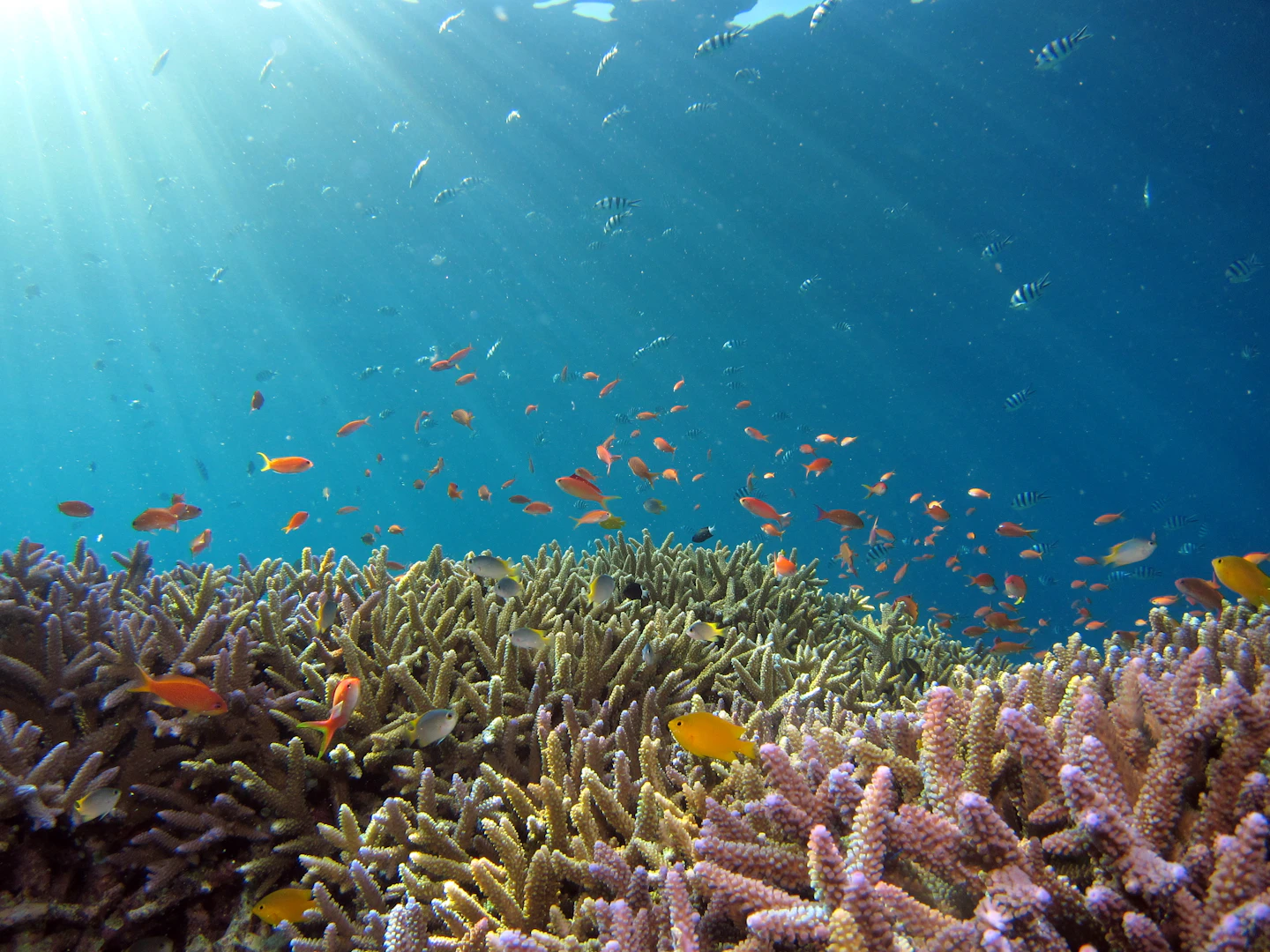
It’s easy to let the whale sharks eclipse everything else Mafia offers, but Mafia Island Marine Park (MIMP) — gazetted in April 1995 and governed by Tanzania’s Marine Parks and Reserves Unit (MPRU) — has a rich fish and coral fauna across its reefs. The same October–March window that’s best for whale sharks is also the strongest diving window generally: calm seas, 15–25m visibility, and water around 29°C from November through March. If your trip doesn’t line up with whale shark season, or you simply want more time in the water, the reef diving here stands on its own.
Marine park fees, in practice
Mafia Island Marine Park charges non-resident adults USD 23.60 per person per day (USD 20 plus 18% VAT), with children about half (USD 11.80, ages 3–15), as quoted by Mafia lodges such as Butiama and Pole Pole; it is paid by credit card at the park gate, and the Marine Parks and Reserves Unit’s own tariff page was not reachable when we checked, so confirm the current rate with your operator. Check with your operator whether any separate permit applies to a whale shark trip or a dive. Fees change, so confirm before booking rather than budgeting from an old blog post — ours included.
Entry requirements and health
Mafia Island sits under mainland Tanzania’s entry rules. Most EU and UK passport holders can get a single-entry e-visa for around $50, valid up to 90 days; US citizens need a $100 multiple-entry visa valid for a year, and the U.S. Embassy specifically recommends applying in advance rather than relying on arrival processing. A yellow fever vaccination certificate is mandatory if you’re arriving from, or transiting 12 or more hours through, a country with yellow fever risk — the vaccine needs to be administered at least 10 days before entry. Malaria risk is moderate to high across Tanzania below 1,800m, including Mafia, and higher between November and May, so prophylaxis is strongly recommended for a trip timed to whale shark season.
What this means for planning your trip
Book October through March if the whale sharks are the point, and lean toward November–December specifically for the best odds — but treat any operator’s sighting guarantee with suspicion, since no one controls where the sharks are on a given day. Budget for the marine park fee as a real line item and ask your operator whether any separate permit applies, and choose your operator on how visibly they enforce the distance rules, not just on price. If you’re combining this with Zanzibar, budget a full travel day each way, since there’s no direct link beyond Dar es Salaam’s domestic flights — see our Zanzibar travel guide for the rest of that itinerary, and our full whale shark guide for the ethics and operator-choice detail this page only summarises.
Frequently Asked Questions
When is the best time to visit Mafia Island?
October through March is the marine window — calm seas, 15–25m visibility, water around 29°C from November to March, and it's also whale shark season. Peak whale shark sightings run November through January, though scientific monitoring has recorded sharks as early as October and as late as February. April and May (the masika long rains) are the months to avoid; some lodges close entirely.
How do I get to Mafia Island?
By air only — there's no regular ferry service. Coastal Aviation, Auric Air and Flightlink fly daily from Dar es Salaam's Julius Nyerere International Airport (DAR) to Mafia (MFA, also called Kilindoni Airport), a roughly 30–50 minute hop that typically costs around $150 one-way if booked ahead. From Kilindoni, most lodges and the main dive/whale-shark base sit in Utende on Chole Bay, about 15km away — a further half-hour by road or lodge transfer.
What does the Mafia Marine Park entry fee actually cover?
Mafia Island Marine Park (MIMP), gazetted in April 1995 and governed by Tanzania's Marine Parks and Reserves Unit (MPRU), charges a daily per-person conservation fee (children aged under 15 pay half) — sources differ on the exact amount, so confirm the current rate with the park or your operator. Check with your operator whether any separate permit applies to your whale shark trip or dive.
How reliable are whale shark sightings?
Tourism operators claim an 80–90% success rate during peak season. No operator can honestly guarantee a sighting on any single outing — treat that as a season-long success rate, not a promise for your specific day.
Is Mafia Island good for diving beyond the whale sharks?
Yes — Mafia Island Marine Park has a rich fish and coral fauna, and the October–March window that's best for whale sharks is also the best window for diving generally: calm seas, 15–25m visibility, and water around 29°C from November to March. October is considered the strongest all-round month for both.
What visa and health requirements apply?
Standard Tanzania rules apply, since Mafia Island is part of mainland Tanzania's jurisdiction. Most EU citizens need a single-entry e-visa (around $50, valid up to 90 days); US citizens need a $100 multiple-entry visa valid one year (apply in advance — the US Embassy specifically recommends against relying on arrival processing). A yellow fever certificate is mandatory if you're arriving from or transiting 12+ hours through a risk country. Malaria risk is moderate to high island-wide, higher November–May, so prophylaxis is strongly recommended.
Is whale shark tourism at Mafia Island ethical?
It's regulated, but enforcement varies by operator. Mafia's whale sharks are predominantly young males, and the Code of Conduct bans touching, riding, blocking their path, flash photography, overcrowding, and aggressive boat chasing; swimming rules (group size, boat approach distance) are set by the marine park and your registered operator, so ask them for the current code of conduct. The Whale Sharks Tour Operators Network of Tanzania (WATONET), backed by WWF, works on sustainable standards, and Sea Sense trains boat captains and crews — but a 2017 report noted many sharks in the area already carry scars from boat strikes and propellers. Choosing an operator who visibly enforces the distance rules, rather than one who chases a shark down for a better photo, is the single biggest ethical lever you have as a visitor.