The Short Answer
Whale sharks aggregate around Mafia Island, Tanzania from October to February, with peak sightings in November and January. Approximately 180–200 individually identified sharks in Tanzania waters. Swimming is permitted under strict regulations: maximum 6 swimmers per shark, 3m minimum distance, no touching. Mafia Island is the single best whale shark destination in East Africa.
The Mafia Island whale shark aggregation
Mafia Island is not on most people’s East Africa radar. It sits 120km south of Zanzibar, 45 minutes by charter plane from Dar es Salaam, with a population of approximately 40,000 people and very limited tourism infrastructure.
This is precisely why it is worth going.
From October to February, whale sharks (Rhincodon typus) aggregate in the Mafia Channel in numbers that make this one of the most significant aggregation sites in the Indian Ocean. The Marine Megafauna Foundation has documented approximately 180–200 individually identified sharks in Tanzanian waters — a number that has grown through citizen science data collected via Sharkbook.ai, the global whale shark photo-identification database.
The reason for the aggregation is ecological: seasonal upwellings bring nutrient-rich water to the surface, triggering plankton blooms that filter-feeding whale sharks follow. The peak concentrations in November–January align with the warmest, calmest Indian Ocean conditions on the Tanzanian coast.
What to expect in the water
A whale shark encounter begins with your boat captain and spotter scanning the surface for the characteristic dorsal fin — the first dorsal fin of a whale shark can reach 1.5 metres in height. When spotted, the captain positions the boat ahead of the animal’s path. You enter the water as a group of maximum 6.
The shark is typically feeding at or near the surface, its enormous mouth open, filtering thousands of litres of water per hour. The first time you see the animal approach you underwater — 12 metres long, wider than a car — your instinct is to move. The correct response is to hold still. Whale sharks are filter feeders and wholly indifferent to human presence. They will pass within arms’ reach if you do not panic and thrash.
The encounter typically lasts 5–15 minutes before the shark dives or changes direction. Your operator may reposition for a second encounter. A good morning session can produce 2–4 individual shark encounters.
What I have not told you yet: the water will often be green with plankton bloom. Visibility can be as low as 3–5 metres. This is not beautiful water. This is feeding water. The experience is not aesthetic — it is biological. Witnessing an animal the size of a bus feeding on organisms invisible to the naked eye is a specific kind of profound.
Season breakdown
| Month | Probability | Notes |
|---|---|---|
| October | Moderate | Season opening. Numbers building. Ocean can be choppy. |
| November | High | Season peak begins. Best combination of shark numbers and sea conditions. |
| December | Very High | Peak aggregation. Most reliable month. |
| January | Very High | Peak continues. Best month overall for first-timers. |
| February | Moderate | Season winding down. Numbers dropping. |
| March–September | Very Low | Sharks have dispersed. Do not visit for whale sharks. |
How to choose an ethical operator
This is the most important decision you make for a whale shark trip. Not all operators at Mafia follow the MPRU guidelines, and the difference in animal welfare and experience quality between a compliant and non-compliant operator is significant.
Signs of a compliant operator:
- MPRU registration confirmed before you book (ask for the permit number)
- Groups of maximum 6 swimmers per shark — not 10, not 12
- Guide enters water first and positions the group before the shark arrives
- Engine cut when within 50m of the animal
- Briefing before the water that includes the 3m distance rule and no-touch policy
- Guide in the water actively managing distance during the encounter
Red flags:
- More than 6 swimmers per shark
- Boats revving engines to keep pace alongside a swimming shark
- No pre-water briefing on ethics rules
- Guide not in the water during the encounter
- Multiple boats converging on a single animal
Beyond Paradise Adventures will publish a verified operator directory when Tim has personally assessed Mafia Island operators. Until then: ask for the MPRU registration number, ask how many swimmers per shark, and ask whether the guide enters the water. The answers will tell you what you need to know.
Getting to Mafia Island
From Zanzibar (ZNZ): The most common route for Beyond Paradise Adventures readers. Connect through Dar es Salaam (20-minute flight from ZNZ to DAR), then onward to Mafia (MFA) — total approximately 1.5 hours. Coastal Aviation and Auric Air offer scheduled service. Direct charters from Zanzibar are possible.
From Dar es Salaam: 40-minute flight. Most convenient for visitors starting in mainland Tanzania.
Planning note: Mafia is a small island with limited accommodation. Book flights and lodge together — availability is constrained in peak season (November–January). I recommend 2 nights minimum (for two whale shark sessions) and 3 nights for a better chance of good conditions on at least one day.
Mafia as a diving destination (beyond whale sharks)
Mafia Marine Park is also one of the best reef scuba diving destinations in East Africa — a fact that gets little attention because the whale sharks dominate the marketing.
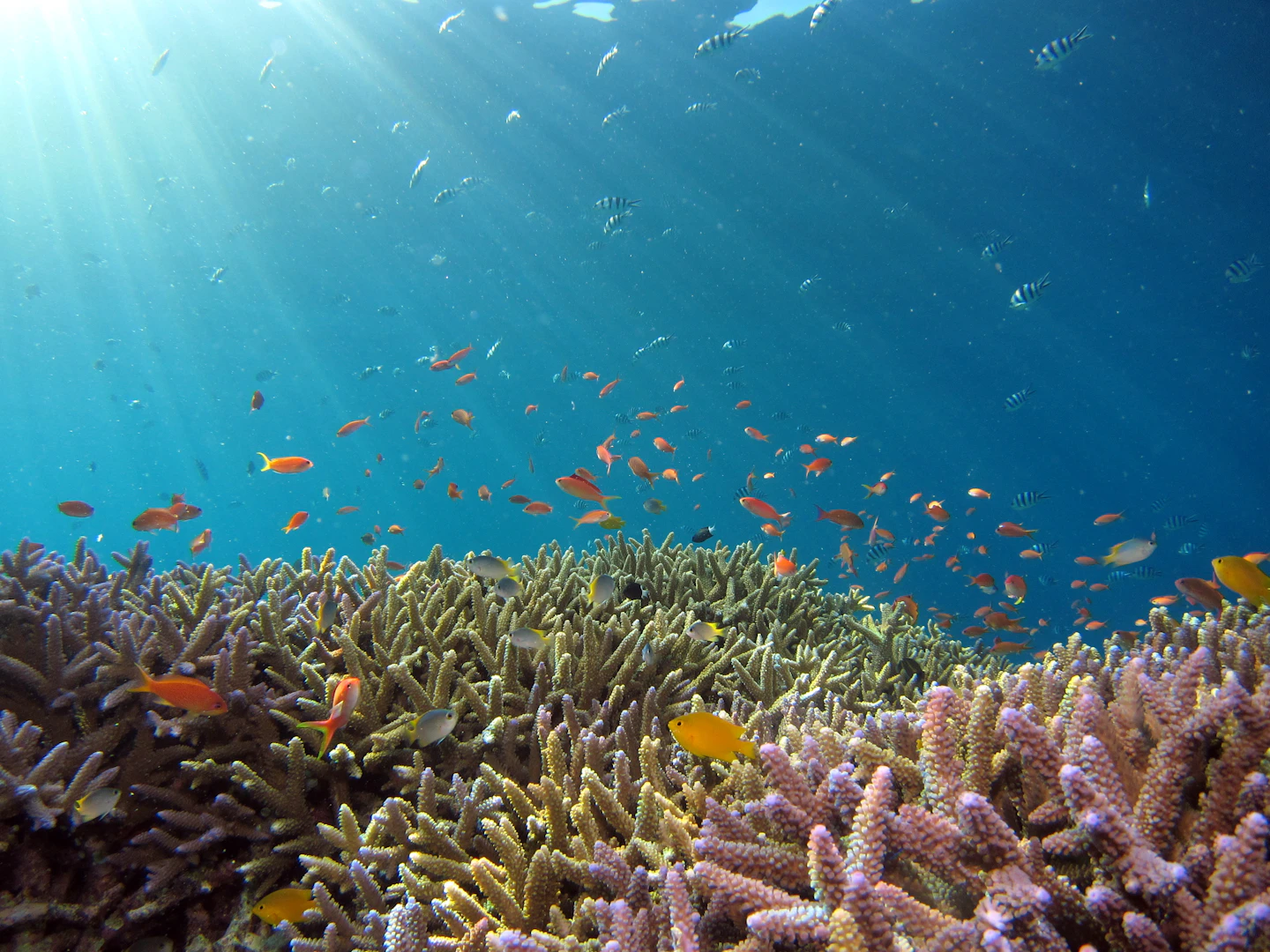
The park’s coral reef system is substantially healthier than Zanzibar’s Mnemba Atoll (which suffered significant bleaching in 2016). Wall dives on the park’s outer reefs offer visibility to 30+ metres with large pelagic fish, reef sharks, and intact coral gardens. Mafia receives a fraction of Zanzibar’s dive traffic.
If you are making the journey to Mafia, plan at least one reef dive day in addition to your whale shark sessions.
What Mafia is not
Mafia Island is not a beach resort destination. The accommodation ranges from basic guesthouses to modest eco-lodges — nothing in the Beyond Paradise Adventures ultra-luxury tier exists on Mafia Island at time of writing. This is a wildlife pilgrimage, not a luxury beach holiday.
If you want both whale sharks and high-end accommodation, the trip sequence is: fly Zanzibar → Dar → Mafia (2–3 nights, whale sharks), return to Dar → Zanzibar (3–4 nights for Mnemba Atoll’s resident sea turtles, Menai Bay’s dolphins, and east coast beaches).
If your itinerary also includes a Tanzania safari, note that whale shark season (October–February) and the Great Migration’s river-crossing phase (July–October) only briefly overlap in October — plan the sequencing deliberately rather than assuming both fit easily into one trip.
The conservation context
Whale sharks are classified as Endangered (EN) on the IUCN Red List. The global population is declining, primarily due to vessel strikes (particularly in Asian shipping lanes), fisheries bycatch, and plastic ingestion.
Tanzania’s whale shark population at Mafia benefits from marine park protection and the growing body of citizen science data via Sharkbook.ai. Every photograph submitted to Sharkbook contributes to the long-term monitoring of individual shark movements and population trends. Your guide will encourage you to submit photos after your encounter.
The ethical arguments for wildlife tourism with whale sharks — when properly conducted — are strong: the economic value of a living shark to local communities is substantially higher than the value of a dead one to a fishing boat. Mafia’s marine park fees and tourism income fund the protection that makes the aggregation sustainable. This is the argument the Marine Megafauna Foundation makes, backed by data from communities around verified aggregation sites globally.
The counterargument is that poorly conducted tourism causes measurable behavioural disturbance. The research on this is evolving. The current consensus: regulated encounter tourism causes significantly less harm than the alternatives (shark finning, bycatch, habitat degradation). The non-negotiable is that regulations must be enforced.
This is why operator selection is the most important decision you make for this trip.
Frequently Asked Questions
When is whale shark season at Mafia Island?
October to February, with peak in November–January. The aggregation coincides with seasonal upwellings and plankton blooms in the Mafia Channel. Outside this window, whale shark sightings drop significantly — do not visit Mafia specifically for whale sharks outside October–February.
How reliable are whale shark sightings at Mafia Island?
During peak season (November–January), sighting rates from reputable operators are high — most guests encounter at least one shark per trip. Outside peak season (October, February), success rates drop to moderate. Weather conditions affect daily success. No operator can guarantee a sighting — anyone who does is misleading you.
Can you scuba dive with whale sharks at Mafia Island?
Whale shark encounters at Mafia are conducted by snorkelling only, not scuba. The sharks feed near the surface and the encounters are typically with animals actively feeding — snorkelling allows you to stay near the surface with them. Mafia also has excellent reef scuba diving (separate from whale shark trips).
What are the ethics rules for swimming with whale sharks?
Maximum 6 swimmers per individual shark. Minimum 3m distance from body, 4m from tail. No touching. No flash photography. Vessels must cut engines within 50m of the animal. These rules are set by Tanzania's Marine Parks and Reserves Unit (MPRU). Not all operators enforce them equally — this is the most important factor in choosing an operator.
How do I get to Mafia Island from Zanzibar?
Fly from Zanzibar (ZNZ) to Mafia (MFA) via Dar es Salaam with Coastal Aviation or Auric Air — approximately 1–1.5 hours including the Dar connection. Direct charter from Zanzibar is possible (~45 min). No regular ferry service from Zanzibar. Budget 1 full day for travel in each direction.
Is Mafia Island suitable for non-swimmers?
Whale shark snorkelling requires swimming comfort in open water with surface swells. Strong snorkellers benefit. Non-swimmers can sometimes participate with a flotation aid, depending on conditions and operator. Confirm with your specific operator before booking.
What is Tanzania's whale shark population?
Approximately 180–200 individual whale sharks have been photo-identified in Tanzania waters using the Wildbook for Whale Sharks (sharkbook.ai) citizen science database. The whale shark is classified as Endangered (EN) on the IUCN Red List — global population declining due to vessel strikes, bycatch, and plastic ingestion.