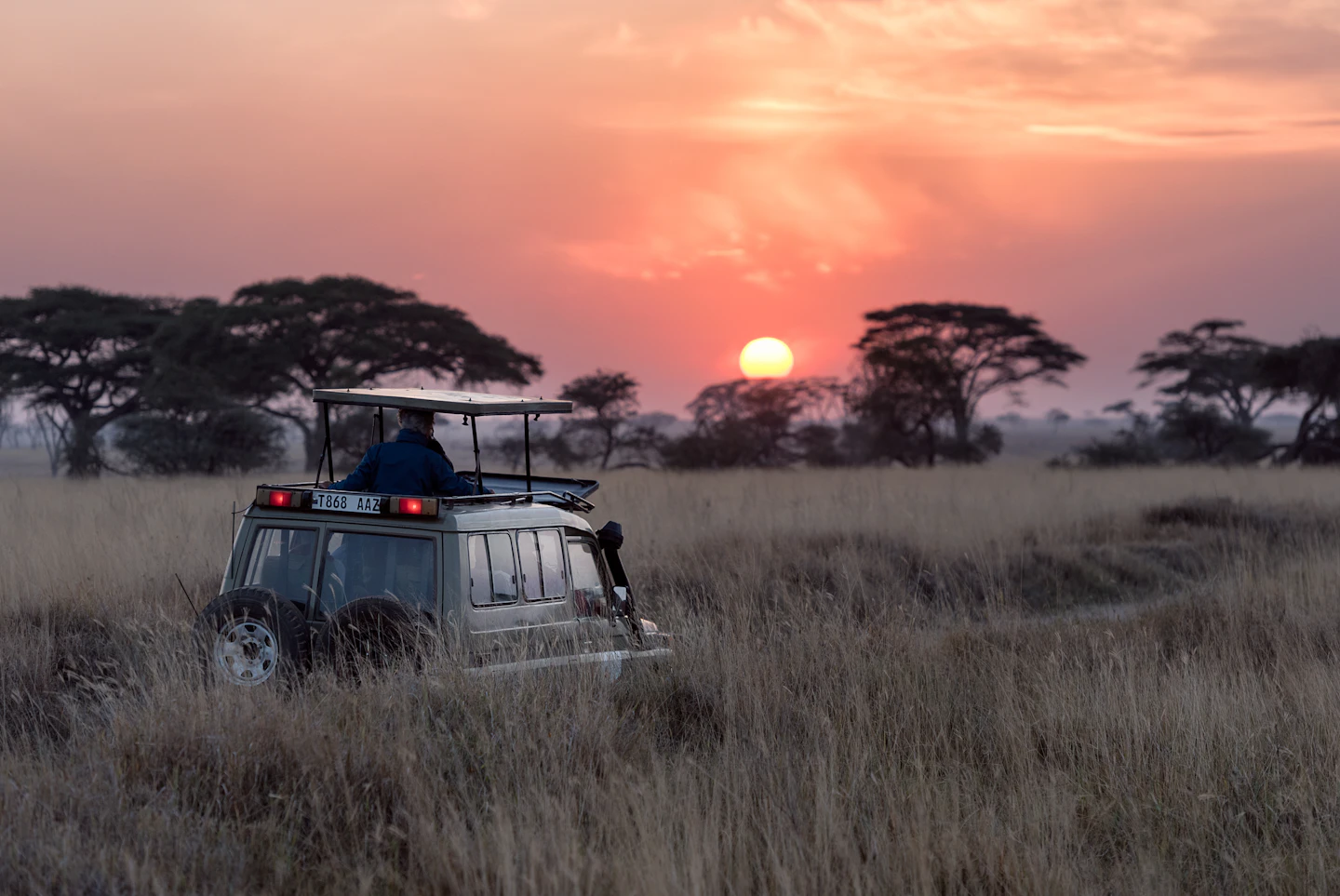
The Short Answer
The Masai Mara's public reserve and its private conservancies (Olare Motorogi, Mara North) are functionally two different experiences, not one destination — the reserve bans off-road driving and night drives entirely, while conservancies allow both and enforce vehicle limits. Migration river crossings peak August–September, but a published study found regulations were broken in over 90% of lion and cheetah viewing events in the main reserve, making operator and zone choice the decisive factor, not just timing.
Two products, not one destination
The single most consequential decision for a Masai Mara trip isn’t the month — it’s whether you stay in the public National Reserve or one of the private conservancies bordering it (Olare Motorogi, Mara North). These aren’t two flavors of the same experience; they operate under different rules entirely. The reserve permits no off-road driving and no night drives. Conservancies allow both, cap vehicle numbers per sighting, and typically cost more per night as a direct result.
The gap isn’t theoretical. A published study of the main reserve found that safari-vehicle regulations — distance from wildlife, no off-road driving — were broken in over 90% of observed lion and cheetah viewing events. That statistic alone should reframe how you think about “which month should I go” versus “which zone should I book.”
When the migration actually arrives
Kenya’s long dry season, June through October, brings clear skies and is the broadly recommended window for wildlife viewing generally. Within that, the wildebeest migration typically reaches the Mara in July or August and remains through September, with river crossings peaking in August and September specifically — late July through early October is the full crossing window, with August most commonly cited as peak.
April is the month to actively avoid: it’s the peak of Kenya’s long rains, and safari roads become genuinely difficult.
What’s actually in the ecosystem
A May 2021 census recorded 2,595 elephants across the Masai Mara ecosystem — a slight increase from 2,493 in 2017, notable against the African elephant’s globally declining trend. The Mara Conservancy reported a stable black rhino population of 25–30 individuals in 2023, a meaningful local stronghold given the species’ Critically Endangered global status.
Night game drives — conservancy-only, never in the main reserve — typically run 2–3 hours from around 7–7:30pm using red-filtered spotlights designed not to disturb nocturnal wildlife, and cost roughly $60–120 per adult in Kenya’s conservancies on top of conservancy entry fees.
Entry requirements and getting there
Kenya requires an Electronic Travel Authorization (eTA) arranged in advance — there is no visa on arrival. Your passport needs at least six months’ validity from your entry date and a minimum of two blank pages. A yellow fever certificate is required if you’re arriving from or transiting more than 12 hours through a risk country, and most of Kenya’s safari and coastal zones carry moderate-to-high, year-round malaria risk (Nairobi’s city center and highlands above 2,500m are the exceptions) — prescription prophylaxis is recommended, not optional.
Fly into Jomo Kenyatta International Airport (NBO), Kenya’s main international gateway, then transfer to Nairobi Wilson Airport (WIL) for a domestic charter into an airstrip within or near the reserve. This is how nearly every luxury itinerary handles the transfer — road access from Nairobi is long enough that flying is the practical default, not a premium upsell.
What marks an unethical operator here
Beyond the general safari red flags — off-road driving outside permitted zones, feeding animals, flash photography — the Mara has its own specific tells: vehicle congestion at a single sighting (50–150 cars has been documented at popular crossings), any operator marketing night drives “in the Mara” without specifying a conservancy (they’re outright banned in the main reserve), and spotlights without red filters on a night drive. Given the documented 90%+ regulation-violation rate in the main reserve specifically, asking your camp directly which side of the conservancy boundary you’ll actually be driving in is a legitimate, necessary question — not an obscure one.
What this means for planning your trip
If you’re choosing between the public reserve and a conservancy, treat it as the primary decision and let timing follow from it — not the other way around. For migration season specifically, August is the safest single month to target for crossings. For the ecosystem’s other wildlife — elephants, the conservancy black rhino population — the conservancy model’s lower vehicle density matters year-round, not just during peak migration months.
For the Tanzania side of the same migration circuit — Ndutu calving, Grumeti crossings — see our Great Migration guide and the Serengeti safari guide. Full month-by-month positioning across both countries is tracked on our migration calendar, which also tracks Rwanda’s gorilla trekking season alongside it.
Frequently Asked Questions
When is the best time to visit the Masai Mara?
July through October is Kenya's long dry season and the best overall window — the wildebeest migration typically arrives in July or August and stays through September, with peak river crossings in August and September. April is the one month to actively avoid: peak long rains make roads difficult.
Should I stay in the public reserve or a private conservancy?
This decision matters more than which month you visit. The public reserve is accessible and has the most wildlife, but bans off-road driving and night drives — and a published study found safari-vehicle regulations were broken in over 90% of observed lion and cheetah viewings there. Conservancies like Olare Motorogi allow off-road positioning and night drives with meaningfully fewer vehicles per sighting, at a higher nightly cost.
Can you do night game drives in the Masai Mara?
Not in the main reserve — night drives are banned there entirely. They're only offered in the private conservancies bordering it (Olare Motorogi, Mara North), typically 2–3 hours from around 7–7:30pm using red-filtered spotlights, and cost roughly $60–120 per adult on top of conservancy fees.
How many elephants and black rhinos are in the Masai Mara ecosystem?
A May 2021 census recorded 2,595 elephants in the Masai Mara ecosystem, up slightly from 2,493 in 2017 — a rare local increase against the species' declining global trend. The Mara Conservancy reported a stable black rhino population of 25–30 individuals in 2023, against a Critically Endangered global status.
What entry requirements apply for a Kenya safari?
Kenya requires an Electronic Travel Authorization (eTA) obtained in advance — there's no visa on arrival. Your passport must be valid at least six months from entry with two blank pages. A yellow fever certificate is required if arriving from or transiting a risk country, and malaria prophylaxis is recommended for nearly all of Kenya's safari zones.
How do I get to the Masai Mara?
Fly into Jomo Kenyatta International (NBO) in Nairobi, then take a domestic charter from Nairobi Wilson Airport (WIL) to an airstrip within or near the reserve — this is how nearly all luxury travelers make the transfer, since road access is long and rough.
What are the red flags for an unethical Mara safari operator?
Contributing to vehicle congestion (50–150 cars has been documented at single sightings), off-road driving outside permitted conservancy zones, interfering with animal movement, allowing guests to disembark outside designated safe areas, night drives marketed inside the main reserve (they're banned there), or spotlights without red filters.